Why is it so dark in space?
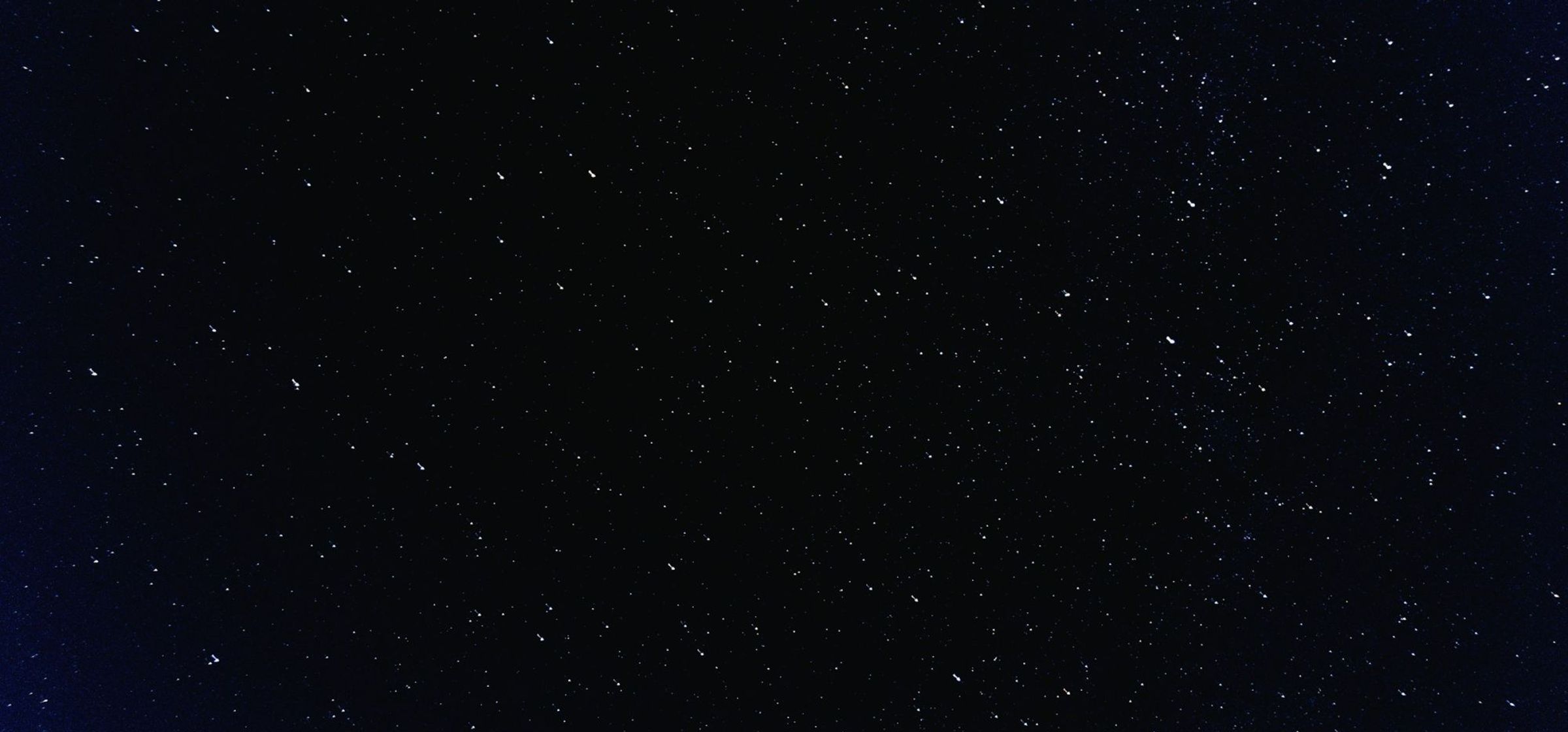
There are an incredible number of stars in the night sky, all shining brightly and lighting up the space around them. There are hundreds of billions of stars in our galaxy alone!
With that many shining stars, you’d expect space to be a brightly lit place – especially this close to our own star, the Sun. And yet the sky goes almost completely dark at night. How is that possible?
Clear skies
Let’s start by looking at the Earth. In the daytime, of course, our sky is bright. That’s because light travels from the Sun to the Earth, where it collides with particles in the air.
The collision causes the light to be reflected off the particles and get ‘scattered’. That means that it isn’t travelling in a straight line anymore. Instead, it bounces off in all directions: up, across, and down – right into your eyes. The scattered or ‘diffuse’ sunlight entering your eyes is what makes the sky look bright.
Empty space
Right then, let’s get back into space. Space has basically nothing in it: the space between the stars is really, really empty. No rocks, no pebbles – not even dust.
The rays of light from the Sun and other stars have nothing to collide with, so they just keep on going in a straight line. Because the light in space doesn’t get scattered before it reaches our eyes, space is always dark.
Always, that is, unless you happen to look directly at one of those shining points of light in the night sky. (Just don’t look directly at the Sun!)
Answered by Ans Hekkenberg