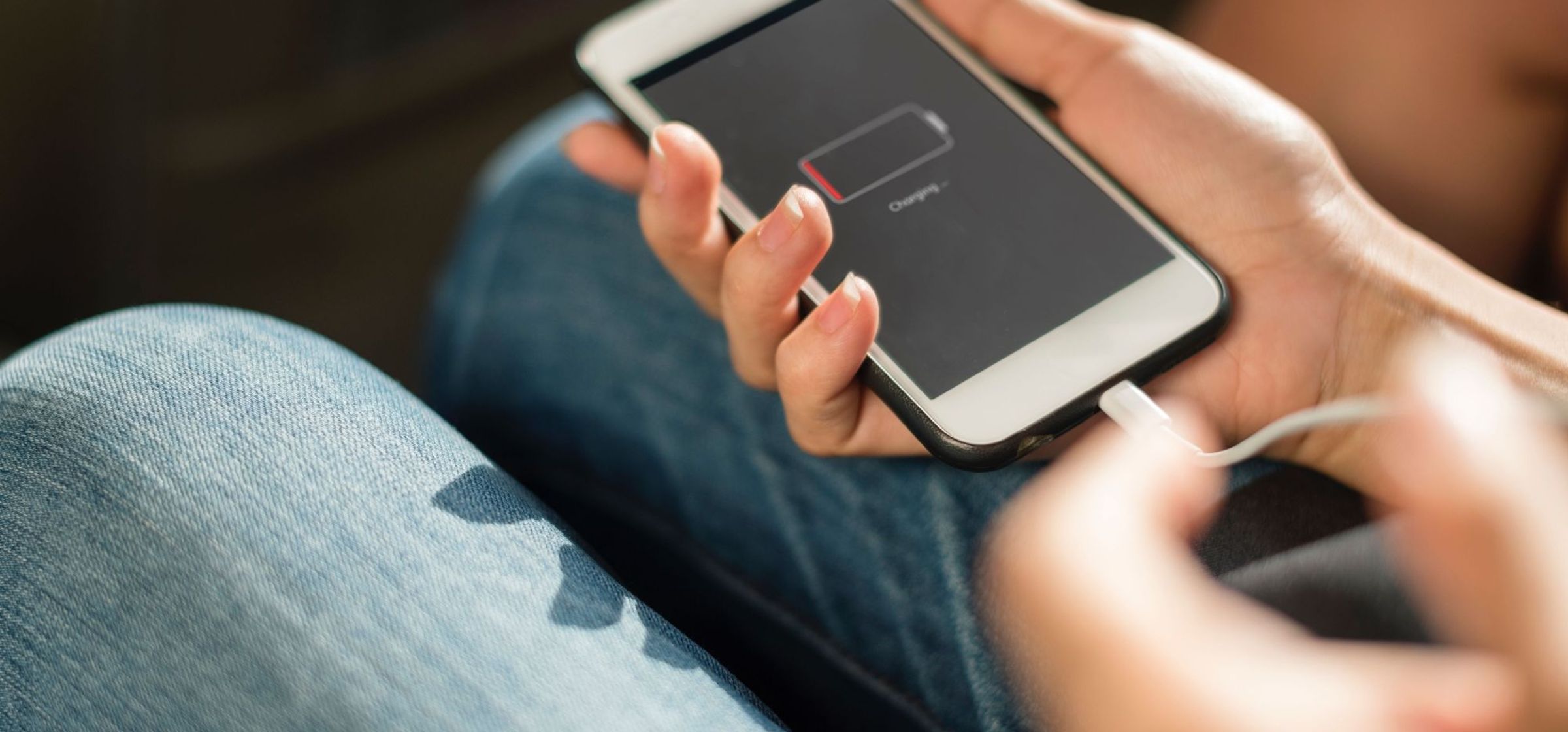
Why do phone batteries lose their charge over time?
When your phone is new, it can go for days at a time without charging. Then it needs charging once a day, and after a couple of years you have to hook it up even more often than that. But you’re sure you’re not using it more than when you got it, so why does the charge go down quicker as the phone gets older?
Ferry crossing
Phones run on lithium-ion batteries. As the name suggests, these batteries contain something called lithium. Lithium can create electrically charged particles called ions.
When you use your phone, the ions move from one part of the battery to another, from the anode to the cathode. Their movement generates electricity.
Photo: StockSnap via Pixabay
When the phone is on charge, the ions move back from the cathode to the anode. Once they’re all back in place, the battery is fully charged.
So a rechargeable battery is a bit like a ferry: particles are constantly moving back and forth between the cathode and the anode.
Out of stock
If you use your phone a lot, all that ferrying of particles ends up damaging the cathode and anode. Eventually, some lithium ions move away from where they’re supposed to be and get stuck to other parts of the battery. It’s as if they’ve jumped off the boat into the water and floated away.
As more and more ‘passengers’ jump off the ferry, there are fewer and fewer lithium ions available to generate electricity. That means the stock of ions runs out quicker, and the ion ferry has to go back to the harbour more often to recharge.
The sad fact is that there’s not much you can do to stop this happening. One thing that can help is to think about how you use the battery – maybe you could avoid using or charging your phone in warm places. That will keep the risk of battery damage as low as possible and help your phone battery work better for longer.
Answered by Yannick Fritschy