What is dark matter
Dark matter is a strange and mysterious substance. It hides in space and avoids detection by our most advanced telescopes. What exactly is it? And how do we know it exists if we can’t see it?
Pulling forces
Let’s begin by explaining the counterpart of dark matter: visible matter. That’s all the stuff we can touch and see: tables and chairs, people, planets, the stars...
Matter with a large mass pulls nearby objects towards it. We call this force “gravity”.
We have it on earth, too. The earth’s gravity pulls on your matter, holding you to the ground and keeping you from floating away into space!
Dark matter shares many similarities with visible matter. For instance, just like normal matter, the gravity of dark matter can pull on other objects. The main difference is that dark matter is invisible.
Dark attraction
We know that dark matter exists, since we’veobserved how “something” is tugging on stars in certain parts of the universe.
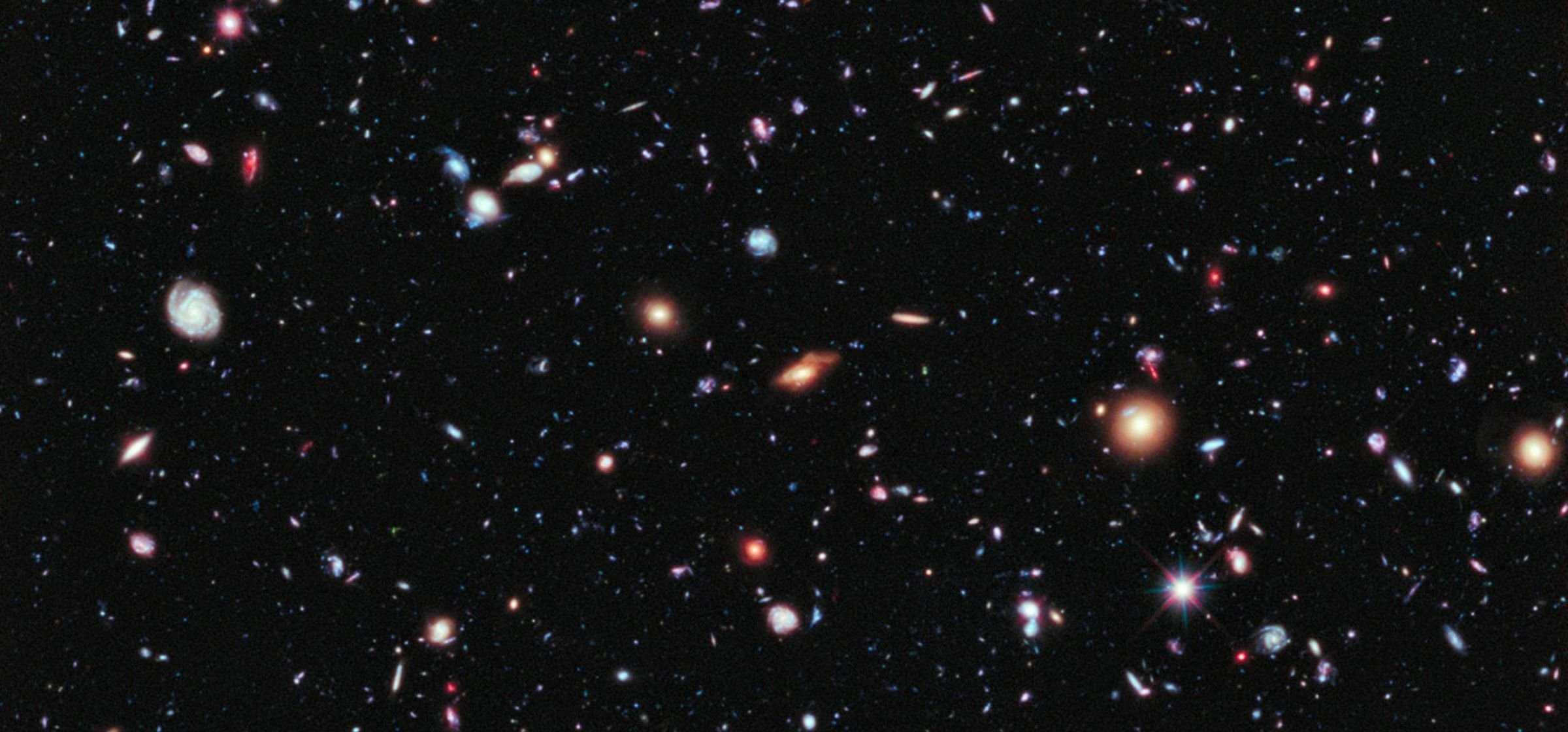
Stars are part of galaxies: giant, spinning spirals containing countless celestial bodies. The outermost stars orbit extremely quickly around the centre of the galaxy – much faster than you’d think just by looking at it.
In fact, they travel so fast that they should fly out of control! But they don’t. That must mean that “something” is pulling on those stars to keep them in line.
But when we use a telescope to zoom in on that “something”, we see nothing. That’s why we think something dark must be lurking there: dark matter.
Particals or holes
Scientists do not yet know what dark matter is made of. It could be particles, a bit like ordinary matter, but different. But it could also be something even more mysterious, like primordial black holes. We don't know yet!
Answered by Ans Hekkenberg