What does the at sign (@) mean?
Nowadays, the at sign is mostly used in e-mail address and on social media. But where does it come from? And what exactly does it mean?
Medieval monks
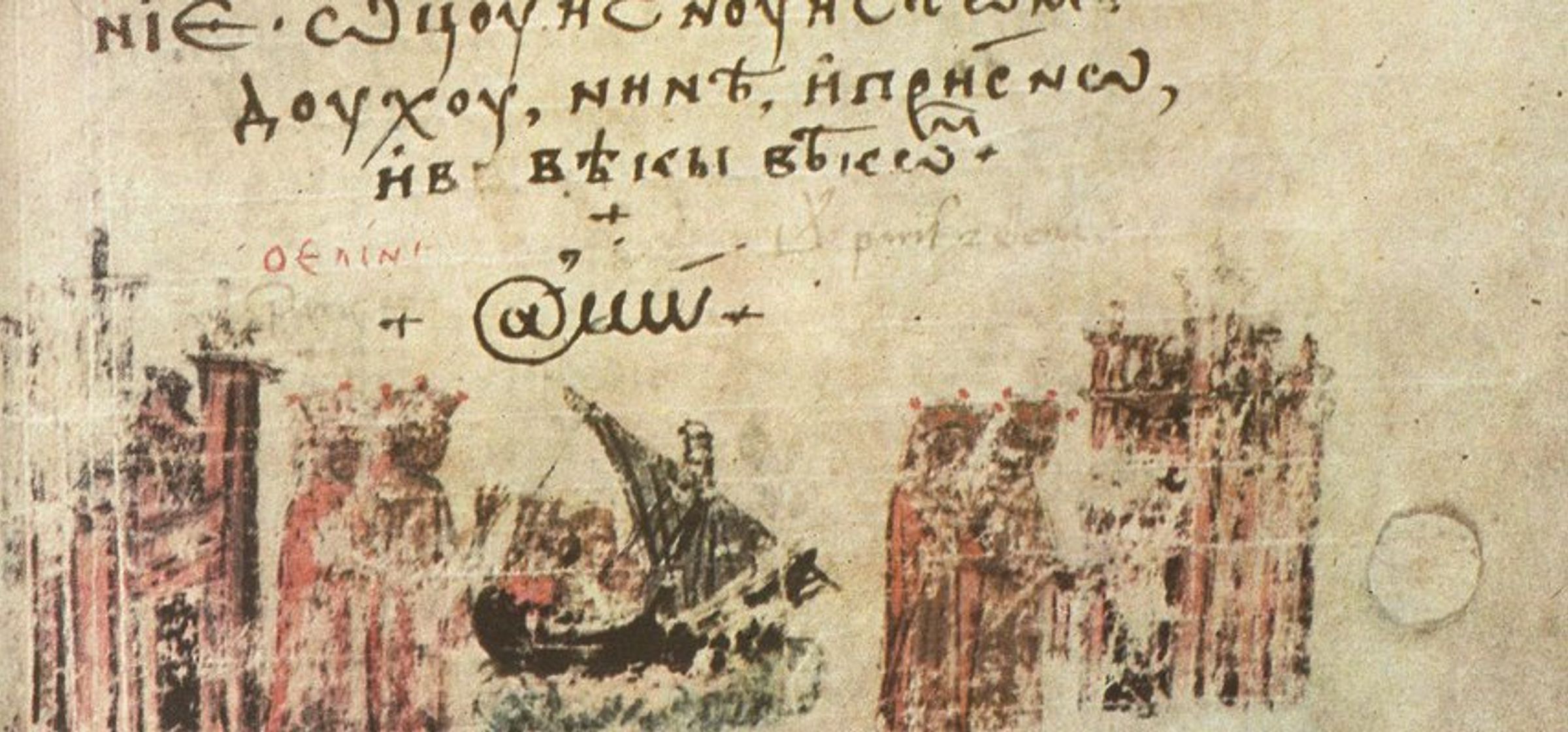
The @ first appeared in the Middle Ages. As there were no computers back then, it must have had a very different meaning.
The symbol is probably a combination of two signs. Which signs these were is something of a mystery, however. Monks may have written “a” and “d” as one letter. @ was therefore the symbol for “ad”, the Latin word for “toward”, according to the Smithsonian Magazine.
A quarter of a donkey's load
The symbol may have its origins in French, in which it denotes an “a” with a grave accent: à. In English, @ was used as shorthand for “at the rate of” when writing quantities and prices per unit. This usage held on for hundreds of years.
In Spain and Portugal, @ stood for arroba, a word derived from the Arabic word for “quarter”. An @ was therefore a quarter of a load that a donkey could carry: 11.5 kilograms in Spain, 14.7 kilograms in Portugal. (Portuguese donkeys must have been stronger than their Spanish counterparts!)
An obscure symbol
The symbol was first used in IT in 1971. It was rediscovered by Ray Tomlinson, the inventor of ARPANET, a precursor of the internet. To send someone a message on ARPANET, Ray needed to join the name of that person to the name of the computer they were using. The connection had to be represented by a symbol that distinguished the person’s name from the computer’s name.
Tomlinson chose the obscure @ on his keyboard, using it to write “joe@computer1”. This became the very first e-mail address.
As time went on, the symbol gained more meanings in IT. It’s now often used at the start of social media handles or to tag someone in a response.
Apenstaartje of olifantenslurf
The at sign has different names in different languages. Italian, Hebrew, Ukrainian and Welsh speakers refer to it as a “snail shell”. Greek speakers use the term “duck”, Swedish speakers “elephant’s trunk” and Hungarian speakers call it a “worm”.What a wealth of words for such a little symbol!
Answered by Jean-Paul Keulen