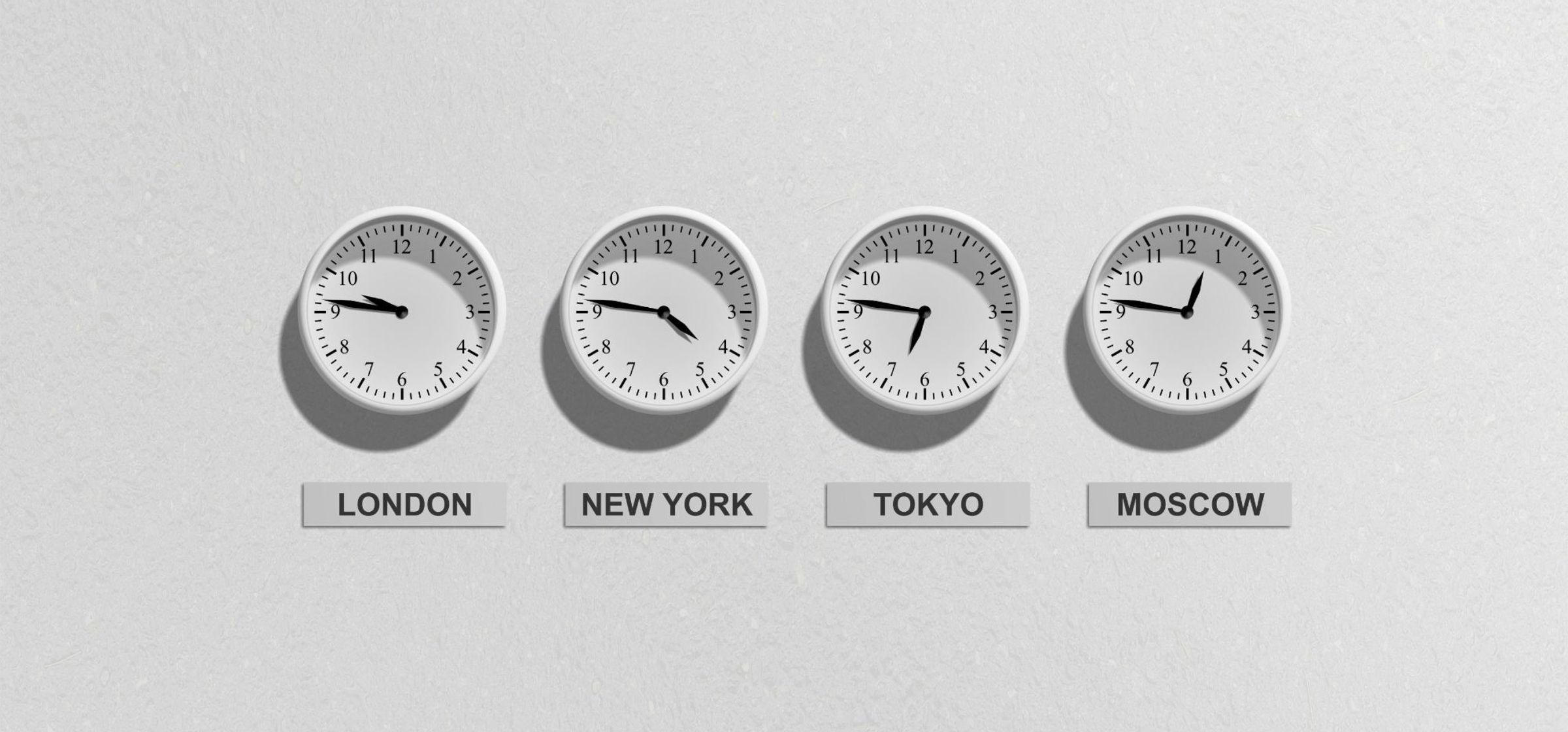
How did we standardise time around the world?
If you want to FaceTime your friend in Japan or chat with your aunt in Suriname, you want to be sure you won’t be waking them up in the middle of the night! Soit’s handy that you check what time it is over there before you call. But how did time get standardised everywhere in the world?
The same time for the whole country
Did you know that there used to be different mini time zones within the Netherlands? We used to tell the time with sundials, using the shadow from the sun to show how late in the day it was. Because the sun comes up in the east, it was always a bit later in the east of the country: clocks in Nijmegen were always ahead of clocks in Amsterdam.
That caused problems once trains were invented – how could train drivers know what time to arrive at each station?
The United Kingdom faced the same problem, so in 1847 they agreed to set every clock in the country to the same time. Everyone would synchronise with the time at an observatory in a part of London called Greenwich. Astronomers at the observatory could make very precise measurements to set Greenwich Mean Time (GMT). In no time (as it were), GMT became the standard time for the rest of the world.
Time zones
But time experts realised it wasn’t the same time in every country in the world. The time had to match up with the day and night. For example, the sun comes up much earlier in Japan than in Europe, so the time of the sunrise needed to be earlier in the east than in the west.
The Scottish-Canadian inventor Sir Sandford Flemingcame up with a solution in the 19th century. He divided the Earth into 24 wedges, like the inside of an orange, and that’s where time zones come from. Greenwich was still used as the reference point for the different zones.
If you travel east from Greenwich, the time will be an hour later in each zone ‘wedge’ you pass through. The Netherlands is in the next zone across from Greenwich, so it’s one hour later here than in Greenwich (and in the rest of the United Kingdom too).
If you travel west from Greenwich, towards America, each zone you pass through tells the time one hour earlier than the previous zone. We still use Sir Sandford’s system today.
Summer time
A new concept emerged around 1940: summer time. Some countries put their clocks one hour forward between March and October. The idea was that this would save energy, because when it stays light outside in the evening you don’t need to turn the lights on.
The Netherlands adopted summer time in 1977. Many other European countries put their clocks forward too, as do other countries such as Cuba. But in Suriname the time stays the same all year round – so make sure to check this carefully as well before calling your aunt.
Answered by Melanie Metz