The weather
Weather starts with the sun. Sunlight heats up the earth, but not equally everywhere. Dark surfaces heat up faster than light ones. Land heats up faster than water. This leads to differences in temperature.
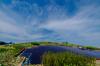
Weather starts with the sun. Sunlight heats up the earth, but not equally everywhere. Dark surfaces heat up faster than light ones. Land heats up faster than water. This leads to differences in temperature.

Warm air can hold more water vapour than cold air. When very humid warm air cools down, the water vapour has to go somewhere. It slowly turns into liquid, forming tiny droplets. Lots of droplets together become clouds.

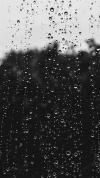
When the droplets inside a cloud get big and heavy enough, they fall.
These droplets can fall as rain, snow or hail. It all depends on the temperature of the layers of air they pass through.
Changes in weather influence plants and animals. Most can cope with a few hot days. But if drought or heat lasts for weeks, plants lose water and stop growing. Insects may not become active until later, or might find less food. Some species can cope with this, others cannot.
View the next story
